Showing posts with label Reading. Show all posts

30 April 2012

Reading Monday: Action and Erotica

Catching Fire by Suzanne Collins


I read The Hunger Games a long time ago, last year I believe, and didn't know that this is a trilogy.  My daughter begged me to buy them for the Kindle and as a teacher, I could not refuse.  I was pleasantly surprised at not only the action sequences and complexity of the characters; but also at the depth of thought from the heroine.  Katniss Everdeen is in a post apocolyptic world which televises and promotes the deadly game of "last teenager standing takes all.  Katniss is a victor, along with her fellow district partner Peeta Mellark, in The Hunger Games.  


Katniss and Peeta are now the faces of rebellion in the districts, making them enemies against the Capitol.  She realizes, very early in the novel, that victory in the Hunger Games was much bigger than just security for her family.  Katniss and Peeta traipse from district to district in the Victory Tour but are leery of the Capitol's intentions.  Catching Fire is not fast-paced like The Hunger Games but you get a better picture of Panem, The Districts and the characters.  I (and my daughter Ayanna) highly recommend it!

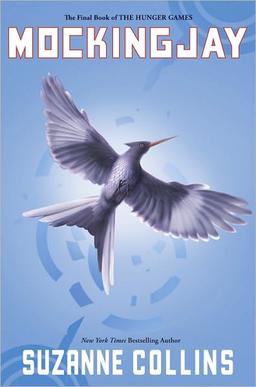
Mockingjay by Suzanne Collins


The final novel in the trilogy was a wonderful read.  It begins with Katniss and Peeta living in the Victory Village of District 12. Victors of the Hunger Games are safe from all future games.  However in a sadistic twist, the Capitol will require all victors to participate in the Quarter Quell, held every 25 years.  Will Katniss be the final victor of all victors or will she defy the Capitol?  


I was quite emotional with this book because it reminded of the quote, "Am I my brother's keeper?"  Are we responsible for our fellow man?  I (and Ayanna) highly recommend this novel.

50 Shades of Grey by E. L. James


This is a novel that is erotic, tantalizing and romantic.  The protagonist, Anastasia Steele, is a very young and naive young woman who is unprepared for the erotic and often sadistic pleasures of Christian Grey.  


This is strictly for those 21 and older.  I do not recommend this for anyone who has an aversion to bondage, dominants, sadism and masochism.  The first 60 pages are slow but that is understandable as we get to know the various characters and their relationships in the novel.  


I am currently on Chapter 7 and am enjoying the book, although this is not a genre I normally read.  Anastasia is a character who loves adventures in books.  She is shy and has low self-esteem.  Christian is an individual who is always in control and manipulates those around him to get what he wants.  I see him as cold and calculating man, while Anastasia is a googly-eyed innocent with no real idea as to what the world of BDSM encompasses.  


Happy reading!

09 January 2012

Reading Monday: Office and Young Adult


This book list is a bit eclectic.  I've read a  book written by an actor who plays a character on The Office (American version).  The first two are books on the list are generally out of my genre preference but I figured "What the hell!"


Mindy Kaling-  Is Everyone Hanging Out Without Me?
This is a quirky and funny memoir of how Mindy Kaling came to be Kelly Kapoor on The Office. It discusses her trials, insecurities, successes and inevitable goal of becoming a comedy writer.  It's a quick read, humorous and very entertaining.


Rainn Wilson- SoulPancake
This book is actually on my wishlist of must read.  From what I have read on the reviews on Amazon, it is a book about the philosophical questions in life.  Some questions that Rainn tries to tackle are:
"Can men and women really just be friends?
If you only had one hour to live, how would you spend it?
What paralyzes your creativity? What fuels it?"

These are questions that have plagued the human race since the beginning of our evolution.  It's based on his website, also called SoulPancake, and it stimulates really insightful ideas on how as a species, we can move forward. It also incorporates some really spectacular artwork.  As soon as my funds are right, this is my next book to read.


Darren Shan- Vampire Assistant 4, 5, 6
I think I have already written a little blurb on the previous books (1, 2, 3).   I really didn't enjoy Book 2 and Book 3 as much as I am enjoying these later ones. (I know- why read them?  Because when I start a series, I have this inner mechanism that makes me finish the whole thing.  Weird, I know.) They are fast paced, with plenty of action for all you adrenaline junkies out there and it delves into the question of losing one's humanity.  Darren is torn between his brethren vampires and his ties to his human life.  It is inevitable that he must become a vampire but interesting to contemplate all that he must give up at the age of 16.


These next two books are reviews from my 16 year old daughter, Ayanna Rodriguez.


Alice Sebold- Lucky
In the memoir Lucky by Alice Sebold, the author depicts the terror of being raped and of overcoming the problems she is facing. Sebold is a straight-forward writer and when reading this book you will begin by going to the scene where she was raped. After telling the police she goes home and tries to live a normal life with her parents and sister, Mary. Unfortunately, she knows she can’t live an ordinary life, she believes she will never find anyone special to her heart due to the circumstance. She relives her childhood, going back and forth to tell the story. This is a rather interesting tale, but I do not recommend this memoir to young adults. If you decide to read this book, please have the stomach for it.


Loung Ung- First They Killed My Father
Loung Ung tells of her childhood in the memoir First They Killed My Father, she begins as a 5 year-old in her small town of Phnom Penh.  Loung is one of seven siblings, she is the second youngest. Soldiers enter their city and begin abducting women and young males, for reasons such as pleasure and having new recruits. Ung’s eldest and second eldest brothers are forced into labor camps. She goes through a hard time and loses many people she loves, but will she overcome the issues she has waiting for her? This memoir is for those who like to watch hope mend broken hearts and broken bonds. Hope you enjoy this memoir because I did.


What books have you read lately?  What books would you recommend?


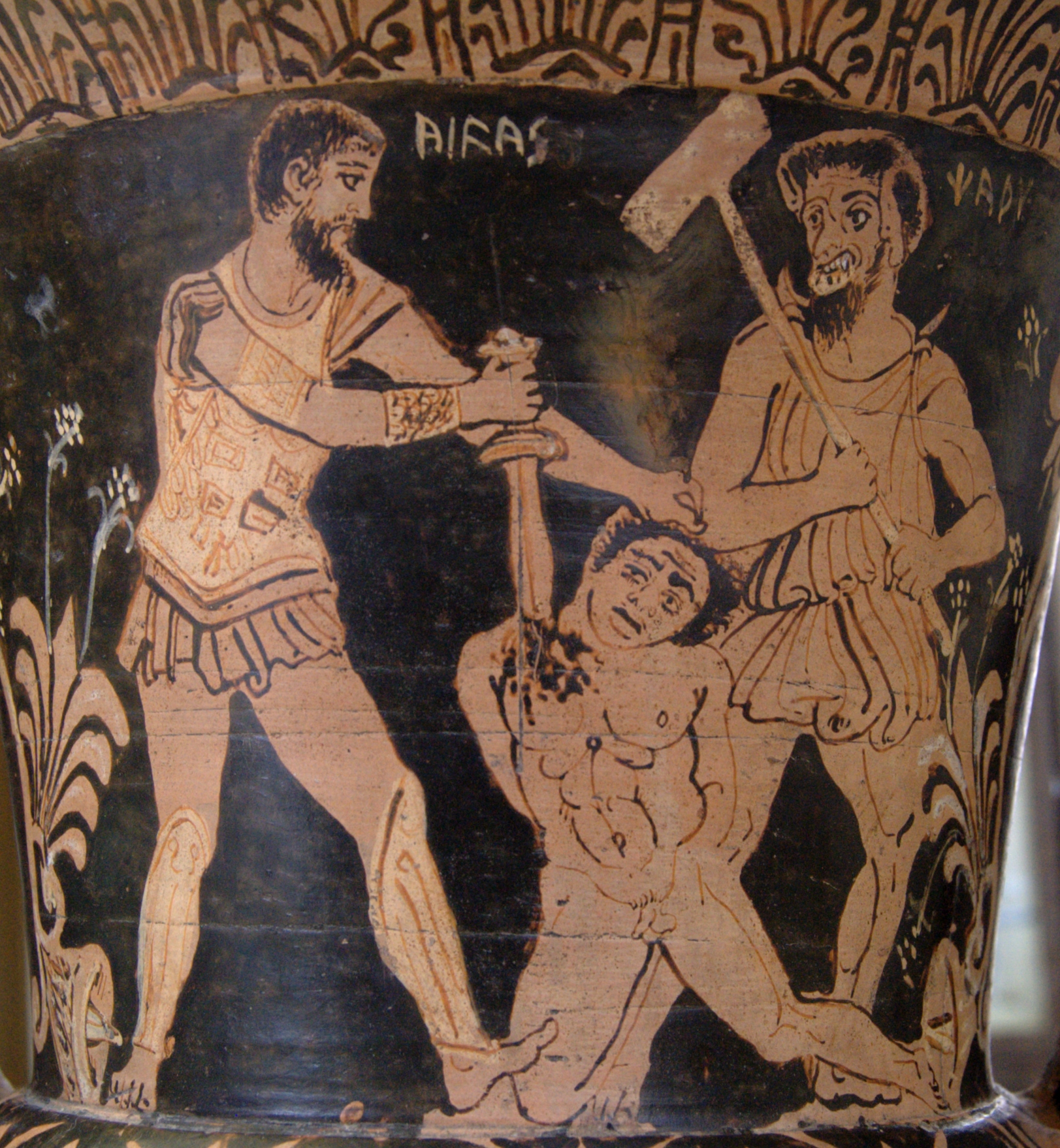
Image courtesy of Wikimedia Commons.  


24 October 2011

A History of (My) Reading


It is a truth universally acknowledged, that a single man in possession of a good mind, must be in want of a good book to read. 

I try to read, I really do. Or at least I really try to think I try to read. I go to the library, for instance, and I walk down the aisles there, smelling the books, thinking that the sheer amount of pages and sentences and paragraphs in that place is pure heaven. I even borrow some books, occasionally. Renew them repeatedly, hoping that I’ll get around to open them. Return them, unread, slightly past the final due date.

But, soft! what light through yonder window breaks? It is the east, and this book is the sun!

I used to be an avid reader. I learned to read at an early age, and from then on I devoured books like other kids devoured – whatever they devoured. Computer games? Stuff like that. I used to turn the light back on after my parents went to bed, and read into the wee hours. I used to fall asleep mid-book, dreaming up new storylines that frequently were better than the ones I found on the pages. My family used to make jokes that I might as well read the phone book, as it seemed not to matter to me what it was I read. They don’t print the phone book anymore, which is good for the environment, but bad for friendly jokes to taunt children who read a lot.

One Book to rule them all, One Book to find them, One Book to bring them all and in the darkness bind them.

University was a major turning point. The sheer amount of non-fiction I was supposed to read put a strain of the amount of fiction I managed to read. Besides, the attraction of relaxing with a good book after having read course material all day was limited. Instead I did… What did I do? I didn’t have a TV. I didn’t have internet for the first year. I must have spent time with actual flesh-and-blood friends, or some other such weird activity. Plus I think I visited my parents a lot. I even kept my job – in the local bookshop – in my hometown that entire year. I remember that my recommendations got outdated, though. I never read anything new, just kept using the same old favourites over and over. Regular customers probably re-read a lot of books that year.

It would degrade me to marry Heathcliff now; so he shall never know how I love him; and that, not because he's handsome, Nelly, but because I have to read this book.

Genre-wise there was also a shift. I almost became a book snob. I had gone from children’s books to young adult to whatever adult books I could get my hands on, with a small lapse back into children’s and YA once I was old enough to actually read the adult books. But then I started thinking about quality. Quality as defined by others. I had a Nobel Literature Prize phase. It was short. Then I had a Booker Prize phase. It lasted a little longer. I read classics; new, inventive works; and bestsellers only if they were given some award or other.

All animals are equal. But some animals read more books than others.

It didn’t last. My dry spell for fiction during that first year of university was also a setback for my snobbishness. I needed lighter reads, less complexity, to put me back on track. These days I don’t consider the genre so much. If I like the look and feel of the book, if the back cover description is appealing to me, if the book has an “x-factor” that makes me want to read it, I will. Or rather, I will plan to. I buy it, or borrow it from the library. Put it in the TBR-pile, physically or on Goodreads. And there it stays, along with hundreds of other books I once planned to read. I never lose faith, though, in my future ability to catch up with every book I once wanted to read. Just you wait and see!

Why is a raven like a reading-desk? 


All quotes in this post are from the first drafts of the famous books they were later to become. True story. 


21 March 2011

My favourite (and not so favourite) Indian books

I am not sure if as many people have growing up reading Enid Blyton in her native England, as they have in India. Ask anyone of my age and background to name the first book they remember reading, and I am willing to bet my dog-eared copy of 'Five go off in a Caravan' that it will be an Enid Blyton book they mention. None of us had ever had bacon and eggs for breakfast and scones for tea, but all of us knew that scones were not scones unless they came with lashings of butter.

With Julian, Dick, George and Ann, and Timmy the dog as childhood companions, and Nancy Drew and Sherlock Holmes forming the logical progression, it is no wonder that I was well into my late teens when I first started reading Indian authors.

The first "Indian" author I remember reading was Salman Rushdie. Everyone, and their second cousin by marraige twice removed, had told me that 'Midnight's Children' was a MASTERPIECE, and curiosity finally got the better of me, and I checked the book out of the library. I expected brilliance, and did not get it. I lowered my expectaions, but the book still did not engage. And I finally ended up finishing the book only because I had yet to realise that my time was too precious to waste on misgotten ideals like 'you started a book, you got to finish it'.

The second "Indian" author I read was Arundhati Roy. I had fallen in love with her as the protagonist of an English language, quirky, campus movie that enjoyed unparalled success within a very select audience, and I wanted to read the book that had got the unparalled advance that it had got. 'God of Small Things, was another of those books that I finished only because I did not like not finishing books. Elegant prose if you pick a page at random and read only one page. But unbelievable characters, and a plot that I thought was non-existent. Maybe I am doing the book an injustice, but not even one scene stands out, which leads me to believe the book was entirely forgettable.

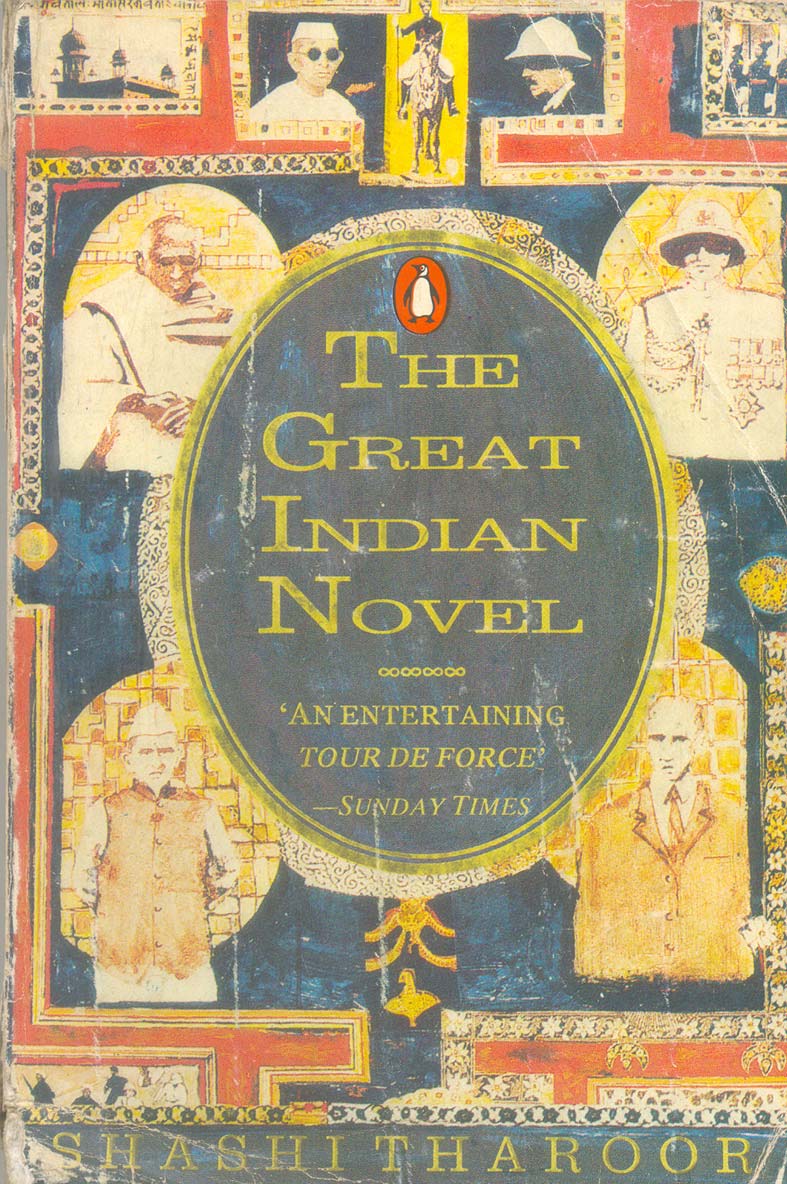
I took a decision NEVER to read any more books by Indian authors, but since I had already purchased Shashi Tharoor's 'The Great Indian Novel", I decided to make that the last book I ever read. I am glad I did. Tharoor took India's greatest mythological story and adapted it to the current political scenario. It was not the most imaginative of plots (I can think of at least two Bollywood potboilers which are based on a re-telling of the Mahabharata), and at the time when I read it, the book was at least two decades outdated. But it was Brilliant. Some references were obvious, and others were too smart for me, but there were enough obscure references which you felt good when you managed to crack. A familiarity with the original story, and a knowledge of the history of the first three decades of Indian independence is needed to make sense of the book, but it is a book I would recommend unhesitantly to anyone who knows a bit about India.

By now, I could see the pattern emerging. For a book written by an Indian in English to be popular, it seemed necessary to have a very strong mystical, exotic and/ or poverty striken angle to it. But was that really India? Wasn't India a lot more complex than just that? Shouldn't books written by Indians and set in India deal with issues that occupied mind-space in India?

Shashi Tharoor gave me that book. 'Riot' is the story of a small Indian town torn by religious violence told from multiple perspectives. In hindsight, the protagonists were almost predictable- the do-gooder American wanting to discover India, and doing so insite the pants of a seemingly upright civil servant. The Hindu and the Muslim. The fundamentalist, and the seculars. The perpecturators and the victims. But what I loved about the book was the way the author portrayed 'reality' from each of their perspectives. It was a book that I ended up recommending to many people, less for the literary merits of the book and more for the balanced picture it painted of the country.

After Riot, I decided to read "Indian" authors without thinking of them as "Indian" authors. I expected nothing more or less than a decent story, well written from them. If the characters and situations seemed familiar, I would be happy. If they did not sound familiar, I would just pretend they belonged to a foreign setting. The book I read immediately after taking that decision was the book which I still consider one of the best books I have ever read.

Vikram Seth hit the headlines when I was a teenager because of "The Golden Gate", the novel written entirely in sonnets. Much as I was captivated by the novelty, I knew better than to attempt reading the book. Instead, I waited for 'A Suitable Boy' to lose my Seth virginity to. And a better book I could not have chosen. Characters I could relate to, circumstances that sounded so familiar I could have lived them myself, believable story line, great storytelling. What's not to adore? And the best part of 'A Suitable Boy' was the fact that in an absolutely non-pedagogical manner, the author was giving me nuggets about my country that I had not even suspected existed. Most people comment on the length of the book - not me. I would not want a single paragraph from that book deleted.

After that there was a whole bunch of books that I sort of liked (The White Tiger, Q&A, The Village by the Sea) even with being aware of their shortcomings, another bunch of books that I refused to finish (The Inheritance of Loss, Calcutta Chromosome), and a very large bunch of books that I refused even to pick up. One book, and only one book, stands apart from that lot.

Rohinton Mistry's "A Fine Balance", was a book I picked up, strangely, because Cruella asked me if I had read it, and what I thought of it if I had read it. It had been a book I had been intending to read for a very long time, but which needed a catalyst to actually get me reading. And I am glad I did. Set in a particularly unsavourable period of recent Indian history, it is the story of four characters I have never met, and would never meet. The book got me thinking like few works of fiction have- it tied together all those assorted conversations which I had with various people, and from which I missed the core point. It made me start reflecting on the real cause of India's ills, and led me, many months and many conversations later, to hone in on what I now believe is the thing we most need to change in our society.  I am not sure if everyone who reads the book will take-away what I did from it, but even otherwise, it is a book worth reading, if only for a story well told.

I could perhaps go on much longer with my opinions on "Indian" books, but that can be kept for Part 2.
31 January 2011

Reading Mondays: Books I'm Teaching This Spring Term

"We hold these truths to be self-evident, that all men are created equal, that they are endowed by their Creator with certain unalienable Rights, that among these are Life, Liberty and the pursuit of Happiness."  (The Declaration of Independence, July 4, 1776)


Yes, we are a little early for the Fourth of July but bear with me.  This quote has a big connection to my topic for today.  Many know that I am a teacher.  What many don't know is that I am a Special Education teacher who has a handful of students included in a New York City general education high school.  I provide support to not only students with disabilities but also for the teacher with whom I co-teach.  For the Spring semester, I will be collaborating with an awesome English teacher, we'll just call her Ms. S., whom I have known for approximately 12 years.  The theme for this semester is "the American Dream."


This ideal is one that is ingrained into the very fabric of American society.  It is the promise that no matter what your socioeconomic status, there is a capacity of prosperity and success.  The American Dream is the theoretical, Utopian fairy-tale that all dreams can come true if you just work hard and believe.  Sometimes they do but as you'll see in these literary works, most often they don't.  As Americans, we are promised by the Declaration above, that all are created equal and we can each attain the pursuit of happiness.


In order to facilitate a better understanding of this theme, Ms. S. decided that there are several literary works which would best exemplify the "American Dream."  (I told you there would be a connection.)  Warning and Digression: the last literary work is a play by William Shakespeare, takes place in Venice and is not really about the American Dream.  However, it has many related motifs, symbols and concepts, (like infidelity, jealousy, betrayal), to the other three works of fiction.

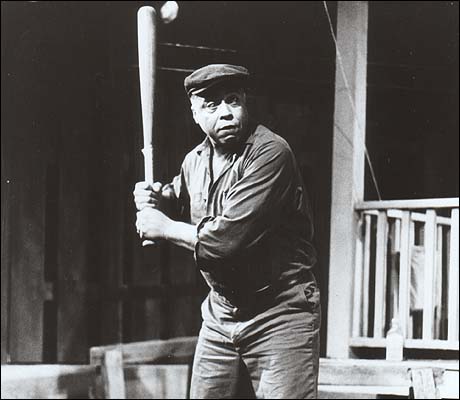
The first of these written works is the play Fences by August Wilson set in the 1940's.  The protagonist Troy Maxson, is a 53 year-old, ex-Negro Leagues baseball player who is now a garbage collector.  He never quite made it to the Major Leagues, as he was too old to play when African American men were allowed to play professionally.  Troy also has a wife and two sons, Lyons from a previous woman during Troys imprisonment and Cory from his eighteen year marriage to his wife Rose.  She continually nags her husband to fix the fence around the home.  This is Rose's way of keeping those she loves near.  Conflict arises between Troy and almost every character in the play, even his mentally disabled brother Gabriel.  He is embittered  by his inability to attain his dreams and places these same ideals onto others.  Troy is often idealistic and embellishes his stories with metaphors of Death and baseball.  This play is a great insight into a family and what happens when dreams are deferred.  My favorite portrayal of Troy's character is by James Earl Jones.  He played the part perfectly.


The next literary work is A Streetcar Named Desire by Tennessee Williams. ( Ladies, stop drooling at Marlon Brando's pecs and bad boy good looks!  :D)  Set in New Orleans during the 1940's, the main character Blanche Dubois arrives on the doorstep of her sister and brother-in-law' two-room apartment, Stella and Stanley Kowalski.  Blanche exudes charm and is The Southern Belle incarnate.  However, because she disdains the everything to do with the "working class," Blanch and Stanley are in constant conflict.  Stanley is a Polish auto-parts supply man who provides for Stella, a homemaker.  Blanche's fragile mental state is soon revealed through her indulgence in alcohol, sexual inappropriateness and her inability to accept reality.  The themes of domestic abuse, rape, death, sexuality, desire and the reliance of these women on men is prevalent throughout the play.  It is the unrealized American Dream which propels Stella, Stanley and Blanche to their fates.  


Next on this train of great classics is The Great Gatsby by F. Scott Fitzgerald.  Now I am going to be honest, I have never read this book.  *hides from the pitchforks*  I did read a little about the novel's description and is next in line to be read.  It takes place in Long Island, New York and delineates the era known as "The Roaring Twenties."  Nick Carraway, a young man from the Midwest, journeys East to get a piece of the American Dream by delving into Wall Streets financial industry.  He rents a house and becomes neighbors with the illustrious and mysterious, Jay Gatsby.  Soon, through the infamous weekly parties thrown by Gatsby, both men are entangled in deception, wasteful indulgence, infidelity and death.  This novel is a revelation into the attainment of the American Dream leading to a gluttony of fatal pleasures.  Fitzgerald was one of the best chroniclers of the 1920's.


Finally, we have the play Othello by William Shakespeare.  I have been a bit deceitful myself as this is the first literary work we are going to teach.  I just thought it would be better to introduce the others as this one is a bit off the beaten path.  It is the tale of a Spanish Military Moor who loves and marries an upper class Venetian lady.  The antagonist, Iago, is a subordinate in Othello's command and resents being passed up for military promotion.   Iago creates this tangled web of lies which propel Othello down a path of no return.  I bet most of you have read this play already!  :D

At the end of each unit, Ms. S. and I will show the film adaptations of each book.  It will be a nice way to tidy up the plays and novel.  I hope the students will enjoy these classics as much as I do.  Well, I'm off the read The Great Gatsby.  Wish me luck!


Image for Fences courtesy of Playbill
Images for Liberty, Suburbs, Othello and A Street Car Named Desire courtesy of Wikimedia Commons
Image for The Great Gatsby courtesy of The New York Sun

10 January 2011

Kindle your readers

Originally, I wasn’t much of a fan of the Kindle. I favour books with actual paper; books that can be put in a bookshelf; books I can touch and smell and feel. And yet, upon packing yet another box of bookshelfable, touchy smelly feely paper books for storage, I had to realize that a digital library indeed would save me a lot of space and (since packing was involved) time. Now that I am about to move to another continent, a digital reader would also save me valuable kilos in my already limited suitcase allowance. The device would allow me to be a voracious reader also in Japan, without having to carry a single book (though perhaps one or two in Norwegian, since we don’t do digital books here yet). The Kindle seemed like the perfect Christmas present.

And so it was (thank you, sisters!). Now, many a blog post has been written about the Kindle, so I needn’t comment on its design or functionality – you can find better posts about that elsewhere. What I did want to comment on, though, was what the Kindle does to me as a reader, or perhaps, as a (potential) book buyer.

In a normal bookshop, I’m a slut. I’m easily convinced to buy, and I generally do so based on a few defined criteria. Unless I am looking for a specific title or author, my browsing is often based on looks. Yes, I can be superficial that way. If I don’t like the cover of a book, I most likely won’t pick it up to even find out if I might consider buying it. Once I have picked one up, however, I still haven’t decided if I want to buy it (I’m not that superficial). I read the jacket. I might open it and read the first few pages. Sometimes I open it at a random page just to see if I get the feeling that this is a book I *must* have.

Apparently, I often find that I *must*. At least the number of books I buy per year should indicate so. Thus I thought that getting a Kindle would save me some money, since the Kindle editions of books generally are cheaper than the paper editions.

True, it has saved me money. More than I expected. You see, as a Kindle customer, I am much pickier than I am with paper books.

The lack of a proper cover is probably saving me hundreds of dollars alone. Sure, you’ve got the cover photo (mostly), but it’s not the same. It’s certainly never sufficient to make me want to buy a book.

More importantly, however, is the “download a sample” function. If you’re not a Kindle owner yourself, allow me to quickly explain: Each book (or perhaps most of them? Every one I’ve so far encountered, anyway) allows a potential buyer to download a sample for free. The length of the sample varies slightly from book to book, but it is generally the first chapter or so. It is always the beginning of the book, and depending on how the edition is made, it sometimes starts directly at the first page of the story, though occasionally the front page and printing information is included in the preview.

The problem – and/or benefit – of this system is that the reader is not free to choose what part of the book she gets to read. The first pages of a book aren’t necessarily (or even commonly) the best or most exciting, even if they are important. A thumb rule for any writer is that the start of a book needs a hook to tie the reader in. With Kindle’s free samples, this becomes more important than ever.

The free sample function ensures that the preview becomes very decisive for which books a reader eventually buys (I have yet to buy a book without downloading the sample). With the option of starting to read a book before downloading and paying for it, it takes a lot more before I actually end up buying it. For regular books, I might find the first ten pages boring, but still read on, because after all I’ve already purchased the book, and it would be a waste to put it down. Often I find that the book captures me after all, and that the missing “hook” on the first few pages isn’t all that important. In a Kindle edition, however, this is fatal. If the sample doesn’t convince me, I will most certainly not bother buying the book, just to see if I eventually will like it.

What this means is that for writers it becomes even more important to focus on a strong start to sell books. I envision that Kindle-friendly versions, where a cliff-hanger will come directly at the end of the free preview, will soon be common. Otherwise, how can a writer catch a reader who has an entire library at her disposal, just a few clicks away?


22 November 2010

Reading Mondays:


Hola! Welcome to my section of the Burrow virtual space, Chary's Charming Chamber. There is a cappuccino/espresso machine and tea set over to your left. In the center of the chamber, there are chaise lounges, enormous floor pillows, reading chairs with overhead lamps, a window seat with a view of the city and lovely little chocolate treats on the coffee table. Browse through my selection of wonderfully enchanting literature on the back wall library and have a seat. Stay awhile. Perhaps you would prefer one of these works of literature:

Dragon Keeper by Robin Hobb: This is the book that I am currently reading. I have to say that Robin Hobb continues to amaze me. She creates an entire world with complex storylines, diverse characters and rich imagery which transport you to the treacherous forests of the Rain Wilds. This book is fantasy and is part of a series. However, it is the first in its trilogy and not necessary to read the trilogies that come before. For those who love dragons, magic, psychic abiliites, and the capacity to communicate with animals; then this is your book. This is an adult book with adult themes, sexual situations and violence.

"They had come so far, yet now that she was here, the years of journeying were already fading in her mind, giving way to the desperate needs of the present. Sisarqua opened her jaws and bent her neck. The air was too cold and her gills were drying out too quickly. There was nothing she could do about that except to work more swiftly. She scooped her jaws into the immense trough and came up with her mouth full of a slurry of silver-streaked clay and water. She threw her great head back and gulped it down. It was gritty and cold and strangely delicious. Another mouthful, another swallow. And again."
Excerpt, p. 1, The Serpent's End.


The Heroes of Olympus Book One: The Lost Hero by Rick Riordan: In his newest adventure, we are back where it all started, Camp Half-Blood. We revisit old characters like Percy Jackson and Annabeth. However, there is a new generation of demigods with their own prophecy to fulfill in an attempt to save the world.

"Seven half-bloods shall answer the call,
To storm or fire the world must fall.
An oath to keep with a final breath,
And foes bear arms to the Doors of Death."
Excerpt,

This is a children's book for ages 9- 12 (approximately 4th to 7th grade). It is infused in Greek mythology and educational as well as entertaining. It is part of a 5 book series.

Iliad by Homer, translated by Robert Fagles: I find this one to be the best translation. This is an epic poem, which was actually sung to an audience, written in such captivating language, one cannot put the book down. Most know the plot - Love Goddess offended that supermodel status girl is the most beautiful in the world. Goddess places curse on girl. Greek King loses supermodel status girl to Trojan prince. Greek King brings army to Troy to get her back. Most feared warrior fights Kings battle. Warrior is really angry all the time. Greeks and Trojans fight epic battles. Small respite to bury dead. I won't spoil the ending, but will leave you with my favorite quote:

"Rage—Goddess, sing the rage of Peleus’ son Achilles,
murderous, doomed, that cost the Achaeans countless losses,
hurling down to the House of Death so many sturdy souls,
great fighters’ souls, but made their bodies carrion,
feasts for the dogs and birds,
and the will of Zeus was moving toward its end.
Begin, Muse, when the two first broke and clashed,
Agamemnon lord of men and brilliant Achilles.,"
-Excerpt, Book 1, lines 1-8.

This is a classic book suitable for adolescents to adults. There is much violence, love, sex, lies and betrayal. Unfortunately, the Greeks and Trojans did not have digital video, shortening the war to a mere two years instead of ten.

Well, that is just a small sample of the books in my library. Feel free to stay in this gorgeous reading room for as long as you want. Adios!

The first image, The Moroccan Style Reading Room, can be found here.