Showing posts with label Motivational Friday. Show all posts

29 October 2010

Motivational Friday - What keeps us Writing?

In his 1943 paper, 'A Theory of Human Motivation', Abraham Maslow proposed that all human beings have a hierarchy of needs-

- Physiological needs
- Safety needs
- Love and belonging
- Esteem
- Self-actualization


These needs are arranged in the form of a pyramid with the physiological needs at the base, and self actualization at the apex. When each level of needs is achieved, we crave the next level of needs.


Physiological needs are the fundamental requirements for survival - food, clothing and shelter. Safety needs are required for the person to feel secure - financial security, personal safety, good health and insurance to take care of anticipated calamities. Once these two needs are met, a person craves acceptance, intimacy, and a sense of belonging - in small and larger social groups.


Esteem and Self-actualization are harder to define. Esteem is the need to be respected and valued by others and by self. It includes the need for recognition, fame, status and acceptance. It also includes the need for competence, mastery, independence and freedom. Self-actualization is the need for a person to understand what the person wants to be, and to move towards achieving that potential.


If you are reading this blog, you have almost definitely gone beyond the two basic needs - for survival and for safety. You may still be struggling with health insurance, and paying your bills on time, but unless you have proceeded to the third level, you are not likely to be in the blogosphere. Blogging, by its very nature, fulfills either your need for belonging to a larger social community, or the need for recognition, status and acceptance.


Many of you are also writers or aspire to be writers, which in all likelihood indicates that you are on the journey towards self-actualization. Few people choose writing as a career to meet their basic survival and safety needs. Writing comes out of a need to put down your thoughts in writing, to connect with readers, to tell a story which you know only you can tell. The compulsion to write is driven out of a need to achieve your full potential, which includes creating a work that engages others.


Why then do so many of us struggle with Motivation? Why are we not able to give to our writing as much as we give to our other jobs (including that of a parent, a householder, a spouse or a child). We meet our deadlines in our day jobs, but struggle to do so with our writing.


Perhaps because that is the nature of the beast. Writing is fraught with risks. You may pour your heart and soul into your writing, but that is no guarantee that anyone will like what you have written. And when you finish the book that your friends like, you have the entire publication process to conquer before your book even makes it to the shelves. And of all the hundreds of thousands of books published every year, how many actually sell?


No wonder it is harder to stay motivated while writing than it is with most other things.


How do you stay motivated? No answers, only an analysis.


I believe that how easy or difficult you find to motivate yourself depends on where you are on Maslow's hierarchy.


If you write because of your need for belonging, you are probably satisfied with having your friends and critique partners appreciate your writing. You know you want to reach a wider audience, but as long as your friends are with you, you allow life to catch up with you. Several of us Burrowers fall in this category.


If you write to fulfill a need for esteem, it is enough for you to know you write well, and that if you do finish what you have started, it will be as good as the better books in the genre. You are willing to judge your own work, and as long as you know you measure up to your standards, you allow yourself to be easily distracted. I can think of one Burrower who definitely falls in this category - she excels at so many things, writing ends up taking a back seat with her.


But if, like the soon-to-be-published Burrower, you write because of a need for self-actualization, you approach writing with the dedication you bring to your day job, and you do not give up till you succeed.


Moral of the story - do all you can to ensure that writing fulfills the highest possible need on your need hierarchy.
_______
As you can see, when it comes to Writing, most of us struggle with Motivation. Since we keep doing all we can to motivate ourselves, we have a basket full of tricks we are happy to share, but none of them really does too good a job for us, and we are always reluctant to ask someone else to apply them. We therefore decided to merge the Motivational post into our Writing one, since for most of us the two go together.


So, starting next month, we will be having a new weekday blog schedule:

Reading Monday - when we ramble about books, characters, lists and plots
Topical Tuesday - when we write about something topical, or something we feel very passionately about
Writing Wednesday - which also includes motivation
Delusional Thursday - we met on a fan-fic forum - need I say more?
Who am I Friday - when we talk about our world, our interests and our passions


Be sure to be a part of it.


And I leave you with the best 100 words I have read this week-
What mandate impelled thousands of people to design and build this intricate device, a robot capable of receiving instructions from millions of miles away? Was it conquest?
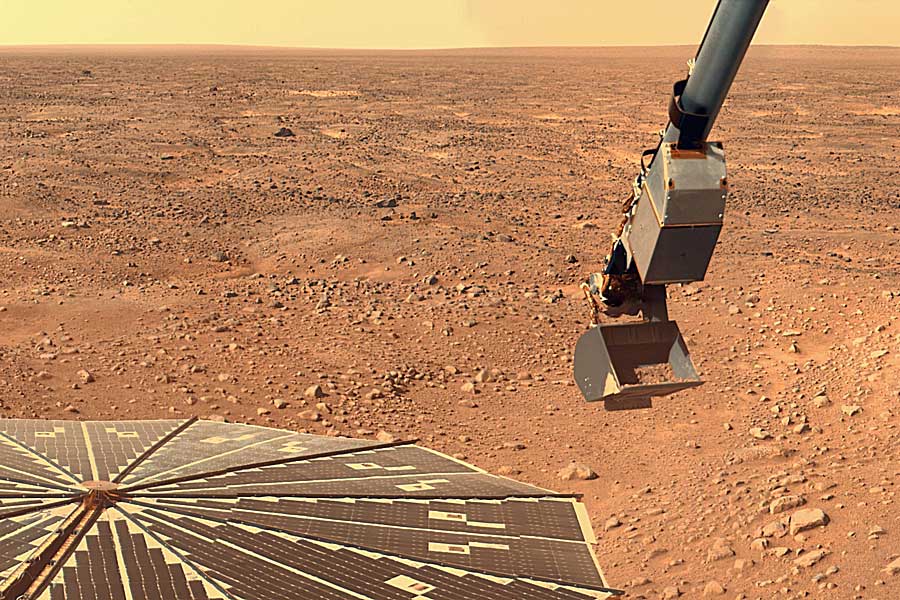
What madness drove them to pick at the alien surface, heat a soil sample, and delve into the mystery of its chemistry? A misplaced survival instinct?

And what force propelled a 350 kilogram machine through the vacuum of space before gently backing it into an alien planet's gravity well?

The answer to all: Curiosity!

There may be no evidence of intelligent life on Mars. But on Mars, there is evidence of intelligent life.
If you want more such drabbles, do visit us at the-burrow dot org.
____
Image credit - Phoenix digs for clues on Mars
All other photographs, writer's own

22 October 2010

Get Prepared, Get Motivated, Get Writing!

Get yourself some shiny new pens and paper, or a decent computer,or you will be doomed before you even start.

Enjoy the last few precious days of relative calmness and prepare yourself for thirty days of sleep-deprived madness.

Tell everyone - including spouse, children, family and friends - that unless someone is dying, you are pulling a Garbo and would like to be left alone for the whole of November.
 

Will your brain into writing mode, and tell it to ignore all of the usual signals that it sends through your body. Food and toilet breaks are to be scheduled in every four hours, no more, no less. Sleeping isn't allowed. This will take practice, so start early.

Resist all urges to play Bejewleled Blitz (or any other pointless game, for that matter). Again, this may take some time, so practicing now would be good.

Ignore the phone. This is a good idea even when you aren't working on a NaNoWriMo challenge.

Talking will be banned (unless you are giving yourself a pep talk, or you are sounding out something you have written), so if, like me, you are a Chatty Cathy, get your fill of tongue-wagging in now, before it's too late.

Invest in ear-plugs. Essential for ignoring the phone and other distractions.

Nuts are essential. Typically, you have to be nuts to attempt NaNo, but you also should really buy some too. Nibbly snacks are an important tool to have when you will probably forget to stop and eat.

Giving up is not an option! You can do this! You will do this! The NaNoWriMo 2010 Winner's Badge will be yours!

15 October 2010

Motivational Friday: Geek Lords

If you've ever stepped into an online gaming arena and gotten a thorough butt-kicking, you know what a Geek Lord is. They're the guys (and gals) who reach the new max level for World of Warcraft in the span of a few hours; they've got a legacy of unearthly high scores in the Civilization Hall of Fame; and if you tune in to ESPN2 on a slow day, you can see them playing NFL Madden: 2011 against actual, professional football players, and winning by a score of 100-0.

And back in the ancient days, when the Internet was used to chat about games rather than playing them, the Geek Lords could be found in comic book shops devastating their opponents at Magic: The Gathering, or some similar customizable card game. That was me, actually, but my favorite was the Star Trek version.


Yep, he's holding Star Trek cards.
Best Easter Egg ever.

More on that in a bit. The question we should be asking ourselves, in relation to more lucrative endeavors, is: How do these people get so good?

The most obvious answer is that they play a lot. And by "a lot" I mean "obsessively to the point of foregoing trips to the bathroom". The slightly less obvious answer is that they're having fun. But is it the promise of fun that motivates them to work on their skills, or is it the process of fun that develops them?


The gamer's dilemma.

And if the latter, is that even relevant to more serious projects that, eventually, will require some work?


The Law of Diminishing Returns

Everyone's heard of the Law of Diminishing Returns (having read this sentence, you can't deny it). But the name can be misleading. It does not refer to returns that diminish over time. Rather, the law describes a decrease in marginal return coinciding with the increase of a fungible factor of production while other factors are constant.

Er... what?

Okay, let's say that Farmer Brown (all hypothetical farmers are named "Brown"-- another law of economics) has ten acres of land and a half dozen workers. Brown and the farm hands work hard, but can only plow a little over nine acres of the land. So farmer Brown decides to buy an ox.

Brown isn't stupid, so he's going to use that ox as efficiently as possible. He's going to take his slowest, weakest worker (and/or best ox handler) and put him to work driving a plow behind said ox. As a result, Brown can now get all ten acres plowed, and he's saved enough time that another farm hand can spend half his day plowing and half the day pulling weeds (a task which was previously neglected).

Follow me so far? Ox #1 = very useful.

Next, Farmer Brown checks his portfolio and decides he can afford another ox. The oxen are the "fungible factor of production". Fungible just means that there's no significant difference between one ox and another. So Brown puts his second-slowest hand (and/or second-best ox handler) to work driving the second ox. His crop yield (returns) will increase again, but not as much as they did from the first ox. The acreage is already plowed, the production difference for ox handler #2 is not as great, and the extra weed-pulling time is spent searching for smaller and smaller weeds.

With three or four oxen, nobody needs to work a plow by hand, everything is covered, and the farm hands are running out of useful things to do. Beyond four, the oxen are only useful for making fertilizer.


Diminishing returns. Q.E.D.

Based on this rather simple notion, we can conclude that, at some point, Brown should stop spending money on oxen and acquire some more acreage. Interestingly, the Law of Diminishing Returns can then be applied to the added land. The first couple of (additional) acres will be plowed and weeded. Adding a bit more, Brown can still plow everything but he'll have to cut back on the weeding. If he keeps adding land without bringing in more labor, he won't be able to work it at all.


Applying the Law Elsewhere

Now let's say you're a novelist-- Novelist Brown, if you like.

Novelist Brown is looking at a first draft, and decides to give it a good read-through so he can edit the work and improve it. Kinda like buying an ox, right? A second editing (of the second draft) will improve the work some more, but not as much as the first edit. Eventually, Novelist Brown should start on a new novel.

Conversely, if Brown keeps starting new projects without ever going back for an edit, he's never going to produce anything worthy of publication. Kinda like buying more acreage, right? Of course, it's not all writing and editing. Brown might need to brush up on his grammar, expand his vocabulary, do some research, or market his book. For every one of those tasks, more is better, but the returns (in quality and quantity of writing) diminish with each successive unit of input.

So there we are. Writing is work-- just like farming. If you want to produce, you have to spend time on a variety of tasks, even though you won't enjoy two thirds of them.


Hold That Depressing Thought!

Not so fast, Pessimist Brown.

The key word in the Law of Diminishing Returns is "fungible". Oxen, land, and farm hands are all likely to be fungible. The next ox won't be any better than the last. But the time investments of a creative, skilled individual are another matter.

I mentioned customizable card games. These required two substantially different skill sets: Building a deck and actually playing the game. I certainly enjoyed playing, but I loved, loved, loved building the decks. I would spend hours sorting through cards, looking at combinations, and designing precise deck ratios. I was good at it because I was having fun, and I kept getting better. Eventually, I could go to most local tournaments and expect to take first or second place despite sloppy play. And, just as importantly, my play didn't stay sloppy for long. Thanks to all the time and mental energy I'd invested in any given deck design, once I started playing, my effective learning rate was much higher than it would have been if I'd simply thrown something together the night before.

Therein lies the secret of the Geek Lords. When the World of Warcraft fanatic spends so many hours getting up to level 70, he's not just improving his character, he's improving his skills.


Smartness. Of a kind.

Is that curve impressive? No? Realistic, then? I've applied diminishing returns, you see, because (presumably) the first 1000 hours you spend will teach you more than the next 1000 hours, and so on. That graph might represent the function f(x) = 4x^(1/2) + x.

But. But!

But it's not just our skill level we're concerned with, it's our overall quality & quantity of production. The production for a unit of time is equal to the skill level times the time, which means that the aggregate production equals the area under the curve. I won't insult you by implying that you don't know how to do a simple polynomial integral, but I'll write it out just to be thorough: [integral] f(x) = (8/3)(x^(3/2)) + 1/2(x^2) + c

Graphically,


Woo hoo!

You already knew (I hope) that people are at their most productive when they enjoy what they're doing. So now you have even more reason to follow the happy path. If this were applied to the farming metaphor, then Brown would keep acquiring oxen, but the newer oxen would be stronger; then the next few oxen would be smarter; somewhere around the 100th oxen he'd be getting animals with opposable thumbs who could genetically re-engineer his crops. His yield over time would be impressive, even if he failed to acquire more acreage, and when he finally did get a bit more land, his production would leap dramatically.

Take careful note of the shape of that curve. Doing one (or a few) things consistently isn't going to produce high yields right away. Those come with time.

For a real-life example, look at Isaac Asimov. He never studied literature or literary technique (as far as I know), and he never put much effort into developing a broad range of interesting characters. Rather, he would be skimming over the latest scientific journal on astrophysics or chemistry, get an idea, and rush to his typewriter to bang it out in story form. Over time, he got better and better at his craft, and became one of the most prolific authors in history. And on those rare occasions when he did put some effort into character development, the payoff was greatly magnified.

If you dare, look at Stephanie Meyer. The Twilight series is a fantastical, self-indulgent romance. Meyer didn't beat herself up adding literary quality or applicable lessons to the book, but amplified the indulgence with sparkling vampires, sexy werewolves, and a protagonist who seduces the underworld by virtue of nothing more than her blood type. The result was moderately successful.

Then there's J.R.R. Tolkein, the antithesis of Asimov. Tolkein didn't want to write a lot of books. He just kept doing what he loved, developing a mythology for Middle Earth and inventing an entirely new language each time he had to wait for his tea to finish brewing. The result is one of the most celebrated works in English literature.


Pursue thy happiness, and be thou fruitful.

-Jason

08 October 2010

Blogifits!

*shifty *

I should probably only make up words that don't look like they are synonyms for seizures, but never mind. I have a friend who is a disbeliever on the benefit of a blog for writers. [And I can't SAY the word disbeliever without thinking of the Charlie the Unicorn video where Charlie's friends say, “Shun the disbeliever! Shun! Shun!” (yes, my children are as twisted as I am) But I don't want to shun. I want to BE RIGHT! (Okay, so some personal failings related to always needing to be right might be showing).] However, what I ALSO WANT is to show you the benefits...

 I thought, we shouldn't be asking, “What can I do for my blog?” We should ask, “What can my BLOG do for ME?!”

So here we have it...


Public Accountability

Personal goals are lovely and all, but if you don't do what you need to meet them, who knows? If, however, you DECLARE your goals in PUBLIC, then you get

1) a little embarrassment if you don't make them.
2) Some peer pressure in the form of 'so how's it coming?' from readers.
3) Some peer MOCKING if you don't make it (I spanked Simon just Wednesday)
4) Some major cheerleading if you DO make it (oh sure, they may cheer after the fact if they didn't know, but if they DID their excitement is more real).
5) Just the act of going public does it for some (myself included)

These public goals can be word count, deadlines, habit forming, query sending... ANYTHING. This also goes with just developing a daily writing habit—some people have only been in the habit of writing when inspired—a blog builds the frequency of just getting WORDS down.


ADVICE

Having trouble with something? You have enough readers, SOMEBODY will know the answer. Just throw it out there. But if you are reciprocating and reading blogs, you run across great advice ALL THE TIME.

When I think of how much I've learned in the last 17 months, I can't BELIEVE there are people who GET THERE without this system. They are a darned lucky bunch of people—that's all I can say about that. Because without this gained knowledge, I was doing EVERYTHING wrong. I was NOT done editing. I did NOT know how to write a query. I didn't have a CLUE how to tighten a plot. There are still a great many things I don't know, but there are a whole lot MORE I didn't used to know. I believe I've received some modicum of expertise in... AT LEAST how to FIND the information I need (if I can maintain my patience and just look for it).

Before blogging... I frankly didn't know I didn't know... Who knew?


The Fabergé Effect

Not the egg... the 70s Shampoo... They told two friends, and they told two friends, and so on and so on (man those commercials used to bug me). But there was a POINT. Having minions... erm... friends... to pass on the word (any word... even, say... Hing, or Knonle) and the trickle effect... can be... WOW. I've had a couple experiences of blogs that go viral, and it is a major trip to see your hits expand exponentially and to be approached from all sorts of directions. Heck, on Monday, one of the AUTHORS Leanne reviewed popped in—THAT is cool!

And when it is time that you REALLY need it (a book release, a promotional event), this can be ABSOLUTELY CRITICAL to success (and these networks CAN'T be developed overnight).


Win Friends and Influence People!

I know it seems like a hokey bit of pokery, but if you are in the same spot regularly, and the same people drop by to visit, it is inevitable you will find some like minds. Even UN-like minds can be great fun to get to know. It has baffled me, really, diving into what seems an impersonal world and realizing the OTHER bloggers out there are people TOO! (who knew?)


Finding Your Voice

When you sit down to write those early works of fiction, it is very tempting to sound like you think you OUGHT to sound. In reality, the way you OUGHT to sound is distinctly like YOU. That is the way to be fresh and original—that is the only thing nobody can copy. It is the ONLY THING ORIGINAL with most stories. Sure there are fresh details and twists, but the main plots have really all been DONE. What is FRESH is the TELLING. The VOICE. A blog, because there is no fiction to it... is just YOU talking to your READERS. What better way IS THERE to learn how to sound like yourself?


The Side Door

And the big Kahunas... SOMETIMES a blog can do something PHENOMENAL. Look at Julie and Julia. A project that becomes something larger than it is... but here, I can even add my own example. When I started blogging, I had written one genre-defying family suspensish thingy... I was working on a very large, unruly mystery... I soon wrote a legitimate suspense... But one of my readers—a cozy mystery writer, said, 'Your voice is perfect for Cozy Mystery.' It had never occurred to me. For starters, mysteries always seemed smarter than me, but really... I hadn't even heard of Cozy Mysteries... I'd READ some, but I didn't know it was a distinct genre...

She niggled me a bit... and a few months later... an opportunity arose... and I seized it. I had an audition, and a contract, and just Wednesday, I got my first advance... so there you have it...

The BIGGEST benefit to blogging, is those unexpected bonuses...

De_Monocerote Unicorn permission
Faberge Egg Permission

01 October 2010

Motivational Friday: Extrinsic Support


I took this picture last year when I went to Ithaca, NY. I found the greenery and peacefulness of nature quite motivating. However, here I am one year later and I've lost my muse. I tried reading previous "Motivational Friday" posts and not for lacking of trying, didn't feel motivated. I have gone through almost every bit of advice one by one and still have not had the inspiration to write a single word this week on any of my WiPs.
I then looked through some old paperwork that needed to be filed and guess what I discovered . . . wait for it . . . awards, letters and commencement programs from students past. I am retyping these letters, but have kept the original voice of the students and spelling.

Dear Ms. Perez,

I a
m writing this letter to let you know how much I truly appreciate having you as my teacher and how I would like to thank you for being hard on me even though sometimes It felt like you were against me. I know you did it because you wanted to see me succeed in the future. I am also thankful for you as a person and a teacher. I believe if anyone I should pick for appreciation teachers day if should be you. Thank you for everything and continue the good work in helping people just like myself.

Sincerely,

MK

This was from a student who lived with extended family. Her mother and father were never really involved in her life and she really didn't have much guidance nor a role model. She transferred from Chelsea High School and moved out of state. When she left, she was three months pregnant and made me the promise that she would graduate from high school. I never saw or heard from her again. But I trust that with all the baggage she carried, she persevered because of her strong spirit and character.


The next letter (rough draft and final draft) is from a student who had very low reading, writing and math skills. She also came from a broken home with very little familial support. This letter was written when I was still completing my undergraduate degree. I was an educational assistant, not yet a licensed teacher. She eventually graduated and went to the City University of New York.


(Rough Draft)
Dear Ms. Perez,


I would like to thank you for being so . . . fun! You are the coolest assistant teacher in this school. You like just like one of us in the hood and that's what's up! You should really be appreciated because you would soon be a teacher of your own and I hope you stay cool and continue relating to us kids.

Thank you,

SS

P.S. Good luck!

(Final Draft)
Dear Ms. Perez,


I would like to thank you for being so fun. It's not the same in Ms. T's class without you cracking up when Ms. T. goes off or disses _____. I think you should really be appreciated because soon you would become a Teacher and I hope you stay as cool as you are and to never become cranky like Mr. C. Thanks for everything you did for me. And yes, I did my homework.


Good luck,
SS

I then looked at all of my inclusion students who are now effective members of society with jobs and families of their own. With tears in my eyes, I thought, look at these kids who are now adults. They had it really bad while in high school and despite their disabilities, still they succeeded. Many went on to college and earned diplomas. This is what it's about . . . perseverance, purpose. These mementos and keepsakes were inspiration enough.


First Image: Ithaca Falls Lazy River, self

Second Image: Courtesy of Wikimedia Commons, http://commons.wikimedia.org/wiki/File:WSTM_Three_Blind_Mice_0063.JPG, WTMUploader.

Third Image: Courtesy of Wikimedia Commons, http://commons.wikimedia.org/wiki/File:CCNY_141-Convent_gate_jeh.JPG, Jim.Henderson.


24 September 2010

Why do you Write?

"I don't think I want to be a pilot", my nearly seven-year old asked me. "Pilots don't have much fun. Can I be a scientist instead?"
"You can be whatever you like, as long as you are having fun", I told my son. "Enjoying what you are doing is the most important thing. It doesn't make sense doing something unless you have fun doing it."

Pat came the answer. "In that case, I don't want to study. Studying is not much fun."
I don't think I need go into the long discussion we then had about how it was important to do certain things now, so you could have fun later - any parent or teacher would be more than familiar with that particular discussion - but it did set me thinking.

I am one of those lucky people who has always had the privilege of being able to allow her career choices to be dictated by whether she was having fun or not. Sure there have been periods where I have marked time doing what I did not particularly like in anticipation of getting the experience to do something more fun in future. But for the most part, I have been able to afford doing what gives me most pleasure. The things I do outside work are also things I enjoy doing - running, reading, writing, photography. There are also the necessary evils - dusting, cooking, cleaning, commuting - but those are things that need to be done in order to survive, we don't have much choice in the matter.

Which then brings me to the question of motivation, and more particularly finding the motivation to write. All of us are either writers or have aspirations of being writers (and if you don't fall in either category, please crawl back under the stone you came from). Quick question for you - Why do you Write? Or, more accurately, why did you start writing?

There would be as many unique answers as there are people reading the question, but all of them will boil down to some variation of, "I started writing because I love writing."

The next question may need you to be more introspective - Why have you continued Writing? Answers can range from 'because I want to see my name in print', to 'because I want people to read my stories'. From, 'because I have stories to tell', to 'because my characters do not let me be till I write down their stories.' The answer may even be 'because I want to make money from my skill'.

If it is the last, you should not be seeking motivation - you have defined writing as your job, and you better put your head down and do your job or else...

But, if the answer is any of the others, put a 'why' before your answer - 'why do you want to see your name in print' - and keep doing it till you get an answer that boils down to 'because I LOVE writing'.

And the next time you find yourself running short on motivation, repeat that mantra to yourself, "I write because I LOVE writing." Once you realise that the reason you continue writing is the same reason that got you writing in the first place - the fact that writing is fun - the motivation to keep pegging away will come.

And if it doesn't? Maybe then you need to take a break from writing till the motivation comes back.

Happy Writing!
____
Photographs- Author's Own.
Models - Would you like to borrow them for a couple of days, I promise I wouldn't ask for ransom to take them back?

17 September 2010

Take A Break

Normally, my best motivational advice would be “Just keep swimming”, but today I thought I’d go for a more counterintuitive tip: “Just give yourself a break, already.”

When working with a manuscript – whether it is the Great American Novel, a children’s book about sea lions or, Digression forbid, a master’s thesis about one of the world’s most depressive and persistent conflicts – it frequently happens that we end up taking ourselves and our work too seriously. We work up nerves and expectations, and all of a sudden, your manuscript is the most important thing in human history. Unless you get every sentence absolutely perfect, there is a chance the world as we know it will come to an end.

Relax. It’s not the end of the world.

In fact, it might not even be a sign that the apocalypse is near.


The ideal writer needs virtually no sleep
 The thing is, we (as in human beings – if there are any giraffes reading this, I strongly suggest you look away for the rest of this sentence, since you only need two hours of sleep each night to stay beautiful) need sleep. We need to eat. We need to smile, to laugh, to exercise, to breathe (shocker), to sing or whistle every now and then, and we need breaks.

Your manuscript won’t go anywhere if you take fifteen minutes off to go for a quick walk.

A weekend off can do more for your productivity than two weeks of diligent work.

One of the best things I ever do for my academic papers (even the ones on a deadline) is to go to bed, and then look at them with rested eyes in the morning. I don’t know if there is such a thing as a “paper fairy”, but she sure seems to visit during the night. She doesn’t take a tooth from under my pillow, and she doesn’t leave a coin. She does take away some of my destructive self-criticism, however, and she often leaves a paper that seems much better than it did the previous night.


Did you know that studies show that 413% of writers are cursed by (light to medium) panic attacks over “terrible” manuscripts when in reality they only need a nap? Did you know that 0.000017% of all writers will eventually eat the paper they write on because they keep forgetting dinner? Did you know that 3 out of 17 books are rejected by publishers because they are stained by coffee since the writer forgot to take a real break and instead brought the coffee back to her work where she accidentally spilled the coffee all over the printed manuscript? Did you know that all the above figures (except the giraffe one) were made up by me in an attempt to get your attention, but that they nevertheless serve to illustrate a point?

Take a break. It’ll do wonders for you.

10 September 2010

Mentoring (Motivation blog)

While I think it is FANTABULOUS for all of us to find what motivates us, I happen to think on that note, there is a bit of preaching to the choir here in the blogosphere. Anybody who is reading and networking about WRITING is at least to SOME degree, motivated. And those of us motivated, can find the help we need... can ask the questions that are nagging at us... but what about new writers?


The Tart's Tale

I wrote once upon a time.

In my youth I wrote a lot. Mostly I journaled. I wrote angsty poetry. I wrote a lot of letters. But I knew I loved it. I wrote book plots... I dreamed of one day being a writer... And I had no clue. This was before the internet (I know... aren't I old? *snort*) But how might my path have been different if I'd had someone to encourage... not the JOURNALISM my mother wanted me to pursue (I am still afraid to talk to people and don't much like fact finding), but my writing of FICTION.

I took a short story class in college. I didn't KNOW at the time how different short stories were from a novel. I STILL can't write a short story. There was ALSO an assumption in that class that we had some clue (something I didn't) of the elements of a story. I think I was probably a bit of a joke because I just didn't know what I was doing.

I didn't try my first serious attempt at a novel until I was 27. I wrote half a horror novel, but didn't know the importance of knowing the ENDING to finishing the darned thing. I was also between years of graduate school and just ran out of TIME. I had to dive back into my courses... (but if I'd had encouragement of the 'only takes a page a day' sort...)

It took Harry Potter to teach me that. You heard me... JK Rowling was my mentor. The world of fan fiction finally taught me how to FINISH a story. But more importantly, the support system found me some people to be accountable to.


Better Than That

Just because I didn't have a good mentor, doesn't mean I can't BE a good mentor. In fact I would argue writers are the only ones really interested in developing other writers. Unlike other fields where only so many people can make it, so we need to stay on top, each writer has a distinct voice and a distinct set of stories. Helping someone develop their story will NEVER hurt me. In fact critiquing others makes me BETTER.

And encouraging young writers is just plain good karma. We all know it takes a while (a very long while, honestly) to really get it down, but why not just encourage people to work through that part? How many people have given up because they didn't quite have it when they were young, and nobody ever told them that doesn't mean they will NEVER have it?


Your Mission

Encourage young people. Find people earlier in their careers and give them a hand. Be as free as you can afford to be with your time, and generous with your encouragement. So go forth! Mentor!

Writing Retreat Permission

03 September 2010

I don't need no stinkin' motivation!

That's a total lie, actually - or rather, take the double negative literally. I am possibly the least internally motivated person on the planet. However, when I have someone else depending on me to do a task, be somewhere, or generally follow through on something, it happens. This is because I have an absolute horror of letting people down. There are few things quite as soul-destroying as having someone whose opinion you value look at you with that disappointed face on - you know the one. Ugh.

So what do I do to make sure things actually happen? Easy - get someone to expect them. This blog is a great example - I have six other people counting on me to get my act together on a regular basis and slap together a (mostly) readable post on a (more or less) designated topic. And it gets done, because I really, really, REALLY don't want to find out what a six-fold version of that look is like (even across cyberspace).


Another good trick is to do things so ridiculously far ahead of time that you haven't even begun to ponder the possibility of procrastinating them yet. Of course, this works best for those tasks which, once you have done them, stay done - things like knitting birthday or holiday presents or (ahem) writing blog posts, not things like scrubbing the bathroom or doing the laundry, since if you're far enough ahead not to procrastinate, then it'll all be dirty again by the time you need it clean.

One of the best writing ones, though, is a WriMo - it has clearly defined goals, a set time limit, and, if you join any of the communities centred around them, lots and lots of support. More importantly for lazybutts like me, though, is the big pile of people who will know if you fail. I don't do failure very well (possibly a consequence of not doing it enough as a kid), and as for the stubbornness factor, well, let's just say there's a reason that "stubborn" is one of the words in my (extremely limited) Portuguese vocabulary (no, I can't spell it; every time I learn how some Portuguese word I know is actually put down in letters my brain goes whirling like a flushed toilet). So while I sort of half-heartedly took a rebel run at NaNoWriMo last November, it was our very own BuNoWriMo that actually got me to finish something - ooooh, that was quite public, lots of opportunities for humiliation, which is no good at all, so to avoid the embarrassment, I simply made sure to complete the project. Problem solved.

Having now outed myself as a terminal slug/sloth/choose-favourite-lazy-animal, I suppose it's all the more remarkable that I'm in fields that require a high level of self-motivation - whether I'm banging away at the keyboard (or scribbling in the notebook, novelistically speaking), clicking away with the needles, or bashing my way through four centuries of viola music, it's pretty much all up to me what gets done and when. But by scheduling recitals, having deadlines for gifts, and getting these other Burrow-types to expect material from me on time, stuff gets done. I suppose that, like the title, this is kind of a negative-motivation idea - but you know, it works for me, so yay!

And this is a Kate shout-out for her birthday, even though she probably doesn't read this blog and is honeymooning in France at the moment to boot. So, you stinker, if you find it, happy birthday, and if you don't, everybody else can just wonder. :-)

Images: knowyourmeme.com
superstock.com

27 August 2010

The Sound of Music


Lordy! It’s already my turn for the motivational thingy again?!? I think this particular subject is the toughest one of all, especially for procrastinators like Yours Truly. Some days I am almost flying high on the Motivational Jet Plane, while other days I’m sinking faster than Titanic into the murky waters of the I’ll-Do-It-Another-Day ocean.


It’s really annoying, this motivational malarkey. I mean, don’t get me wrong, it’s a fabulously handy thing to have around, but when it’s not there you’re kind of screwed. And sometimes you need to be motivated just to get motivated, if you know what I mean, and quite frankly some days I need a kick up the butt just to get out of bed, never mind do anything that is the least productive.


Of course, this motivation thingy applies to anything and everything, not just writing, but seeing as this is supposed to be an informative and useful writer’s blog, I suppose I should probably try to stick to the subject at hand.


Which is motivation, in case that wasn’t obvious already....


Anyway, I’m probably the last person to ask for advice about pulling your finger out and using it (along with your other digits) to write that bestseller, but in a funny way I am probably also the best person too. Confuzzlegasted? I’m the worst because I can safely say that I am the least motivated Burrower in the history of the, er, Burrowers (which isn’t all that long now that I think about it, which kind of takes the point of the phrase away, but never mind), so it’s kind of like asking the Devil about feather boas and fishnet stockings (which, now that I think about it [I seem to be doing this a lot today, sorry] might not be that strange at all if he’s a kinky kind of Devil).


What was I talking about? Oh, yes – something about me being the worst and the best person all in one. So, as for me being one of the best people to consult when seeking motivational advice, I say this because although I’m notorious for slacking in the writing department, when I do get my Motivational Mojo flowing, I can type like the Devil himself (though not that kinky one with the feather boa and fishnets).


So on those rare occasions when I do get fired up, what were the triggers? What was it that gave me the push that was big enough to get me out of my writing slump? I don’t have many triggers, but there are one or two things that really help. I’m going to use an example from a recent(ish) writing ‘success’ for today’s blog (yes, I know it's a ramble and a half, but I do get there eventually).


Back in January 2009, I had been hearing the same song over and over on the radio for weeks on end (luckily I liked the darn thing or I would have gone doo-lally). I was re-reading the final Harry Potter book one day, and I happened to hear this particular song just as I was reading the chapter which detailed, through a series of flashbacks, the relationship between two peripheral characters. I didn’t really think anything of it, but when I went to bed later that night, my brain was humming the song and thinking of the characters from the book at the same time (I know, the fact that my brain did two things at once shocked me too *snort*). I don’t remember dreaming about it or anything, but when I awoke the following morning, I had a full story in my head and proceeded to write it over the next three days. Now this wasn’t a novel by any means, but it was 15k words, so not bad at all in my humble opinion.


It was the song that did it. Okay, the fact that I can get kind of obsessed with writing the history of Harry Potter characters that we know little about helps, but it was the song that pushed me into writing. I’ve always enjoyed using songs and their lyrics to inspire short stories, but it wasn’t until I wrote this particular story that I realised how powerful a tool music can be. Since then I have frequently used music as a motivational tool; whatever genre you are writing, there’s bound to be a music type to suit. Enya’s haunting voice was constantly in the background when I was writing my first ‘original’ novel (I really need to dig the CD collection out actually, because I still haven’t finished that particular story *shifty*), while when I was writing my NaNo novel last year, I had MTV Hits on in the background, which mostly played disco-y stuff at the time what with the festive season approaching and everything. This was absolutely perfect for getting into the head of my main character, who is sort of a funky modern-day Cinderella.


Yes, music could prove to be a distraction – I wouldn’t recommend blasting it till your windows shatter, for example – but the right music can really make a difference, and if you haven’t tried it already, then I highly recommend it. If it can help me, the Person Most Likely To Never Finish Her First Novel, then maybe it can help you too.

*Image courtesy of publicdomainpicturesdotnet

20 August 2010

Motivational Friday: Distinguishing Miracles

"It was a miracle and we have to give thanks to God"

Thus spoke Pedro Gallardo, governor of San Andres, regarding the survival of 130 passengers and crew following the crash of a Boeing 737 on Monday.

To which I say: Dude, seriously? A miracle? From, like, God? Duuuude! The plane was brought down by a thunderstorm! It might have been struck by freaking lightning!

So you reckon God wanted to punish the airplane, but not the people inside? And he couldn't wait until it was on the ground and empty?


Riiiight.

Now, before I mete out any more abuse, let me be clear on two things:

First, Gallardo was not speaking as a panic-stricken passenger who'd just survived the crash. He is a political figure. And the power wielded by politicians morally obligates them to use good critical thinking skills, even if some few (I dare say more than a few) fail to display them.

Second, by no means do I wish to denigrate the man's religious beliefs, only the lack of aforementioned critical thinking.

The passengers and crew had a bit of good luck, following on the heels of some very bad luck. But their survival depended on more than that: It was made possible by over a century of aviation technology; by an airplane body that cracked instead of disintegrating on impact; by seats, supports, and restraints that lessened the damage to their bodies; by the skill of the pilot; and by the rapid response of rescue crews who doused a fire, removed the passengers, and provided medical care.

For those who believe in a God (a question outside the scope of this particular blog post), you needn't restrain your gratitude. Thank Him for the bountiful Earth that makes these technologies possible; for the sturdiness of body to survive minor impacts; and, above all, for the powers of sense, reason, intellect, and choice that make such endeavors possible.


Common Amazing Achievements

Why do birds build nests?

I'll take a moment while you think of an answer.

(waits)

I suspect you said (thought) something like this: "To provide a shelter for incubating eggs, so that chicks can be hatched and raised thus passing on the birds' genes."


Well, that's pretty much right. But now let's ask: Why motivates a bird to build a nest?

The answer to that one is, surprisingly, very different. It starts when a bird has found a mate (or reached a point of maturity combined with a favorable season, if it's the sort that builds a nest to attract one) and suddenly feels dissatisfaction with the general lack of a nest. This makes the bird want to find a good nesting site and put a twig there.

The twig placement produces satisfaction. All by itself. The bird has no idea that this is leading up to a nest, and not a clue in the world as to the function of DNA.

But with one twig in place comes the desire to add another.

And so on.

Okay, so how do I know this? Well, with apologies to any aviaphiles out there, birds aren't nearly as smart as we are, and it's quite evident that humans do the same thing. Our own survival does not depend on heavy long-term planning or an understanding of biology.

We collect stuff (that later becomes useful) because there is an immediate satisfaction to hoarding. We organize and tidy up our own "nest" (improving its long-term value) because it seems so much nicer that way. We store up fat reserves because fat is yummy. We develop social bonds because the process makes us happy. We reproduce because it feels good. We take care of babies because they're so darned cute.

And so on.

After all that, most of us have built up some kind of life that should seem like a miraculous achievement. Set aside the fact that you won't be getting a nobel prize for your DVD collection, or for getting along with your boss, or for potty-training the kid, and focus on the sheer magnitude of it all.

Imagine starting over. Or, better yet, imagine doing all of that without any immediate satisfaction: It's your job to spend 1000 hours playing with plastic dolls, 1000 hours in conversation with mannequins, and you have a list of 1000 (uninteresting) items that you have to purchase and carefully place in an empty apartment.

Impressed with yourself yet?


Extraordinary Amazing Achievements

The purpose of this post is not to help you delay gratification and work harder (but if does that, great). I want to warn you about a mental hurdle.

Or perhaps it's not a hurdle so much as a baby gate. It's something that God and/or nature (again, outside the scope of this post) has put in place to protect you from wasting resources on projects that pure instinct is not adequate to evaluate.

(image permissions)

Then the real mental tom-foolery happens when you consider the creation of a modern jetliner and your brain grasps for a superficial comparison-- like buying a ticket and getting on board. It tries to count the steps involved using short-term memory. After all, this is adequate for the latter action (buying a ticket). But it's completely unsuitable for the former. So it seems like a miracle.

Thankfully, we've also been given (idem/eadem) the cognitive tools to make a critical evaluation and jump the virtual gate. Maybe you can't build a jetliner all by yourself, but you certainly can write a novel, finish medical school, or even become a millionaire. In fact, the magnitude (if not the planned focus) of your life's accomplishments thus far probably exceed the necessary effort several times over. Just don't compare it to doing your laundry.

"From now on we'll live in a world where man has walked on the Moon. It's not a miracle, we just decided to go."
- Apollo Astronaut Jim Lovell

13 August 2010

Motivational Friday: What's my motivation?

When designated to write about this topic, I could only think of the Pepsi commercial where a group of individuals are acting out a sketch. At the end of the ad, one actor stops, comes out of character and looks to the others saying, "What's my motivation?" Although the ad is hilarious, it brings up a very real issue that is prevalent throughout every creative professional's career. What is my motivation? Some techniques that help me get motivated are as follows:
  1. Set some goals and stick to them. The best way to motivate oneself is to be consistent and determined to write.
  2. Designate a time of day that is set aside for writing. For Hart, it is the bath in the evening. For myself, it is after 9:00 pm as my children are in bed and am less likely to be interrupted with the incessant "Mom, Mommy, Mami, etc."
  3. An easy way to set aside a block of time for writing is by using a timer, set for an hour and then take a break when the hour is done (get a snack, stretch, walk around, etc.). Once break time is over, get back to writing.
  4. Read magazines, news articles or blogs on writing. These often will give very useful tips on how to not only motivate yourself but your peers as well.
  5. If monotony is the problem, change something. Change location, writing habits, switch to a different pen or try writing in a notebook instead of a computer or laptop.
  6. Try to remove all distractions. My bane is Facebook Bejeweled Blitz. For you it may be the phone or any site on the internet (the omnipresent procrastinating tool).
  7. Make outlines and create deadlines for the project. This will keep you on track and the outlines are especially useful during those times of writer's block.
  8. When all else fails, be like the Nike ad: JUST DO IT! Take a couple of deep breaths and just write. Do a free write (in the classroom we call this a quick write) where you jot down anything that comes to mind, whether it has to do with your work in progress or not. Just write.


What are some techniques that work for you? We, at the Burrow, definitely want to know "What's your motivation?"


First Image courtesy of : Teacher's Education

Second Image courtesy of: Sticking the Boot In

06 August 2010

Keep Running


A little over two and a half years back, I took part in my first half-marathon. I was never a runner, and wasn't even particularly athletic, but had registered on a whim, and having registered was determined to see it through. On the days leading up to the race, I told myself three things - 'finish the race, try to run at least half of it, attempt to do it in under three hours.' Since I had never run more than 13 kilometers before the race, I had no idea if any of the three was even possible, but I was determined to give it my best shot.

At the 20 kilometer mark, I was within striking distance of all three of my pre-race goals – I had a little over a kilometer to go, had definitely ‘run’ much more than twelve kilometers, and at that stage could have crawled backwards and still made it within three hours. Minutes from the finish line, guess what I did? I slowed down and started walking. It wasn’t that the legs couldn’t run anymore or that the lungs were bursting – my mind decided that it did not matter whether I ran or walked any longer, so the heart told me to Quit and walk the rest of the way. I tried getting myself to run, but couldn’t manage more than a few steps at a time.

The last kilometer IS the hardest!


And then, I saw him.

A young boy with cerebral palsy, valiantly pushing his wheelchair, while his concerned father walked beside him. That was the picture of true grit – he was so fatigued he could barely move his arms, but still plodded on unassisted to reach the finish line. There was nothing in it for him – no cash prizes, no medals, no sound bytes. Nobody would have blamed him had he allowed his father to assist him. But he did not. He was determined to do it on his own, and he was doing so.

Tears came to my eyes. I wanted to go to him and congratulate him. Instead, I decided to pay a silent tribute to him by doing what he would have done had he been in my place – I started running again. And I continued running till after I crossed the finish line.


One year later, I was back again. This time I was battling cramps; every step I took was excruciatingly painful. I should have dropped out, or at least slowed down to a walk. But that was
never an option. If that boy could wheel himself towards the finish line, so could I. One hundred meters from the finish line, I built up speed. I finished in a sprint and collapsed the moment I crossed the finish line. The Heart Won.

Running is the best metaphor I can find for Life. Whether you run on the road or on a treadmill, running is less about the legs and the lungs as it is about the mind and the heart. There are days when you are rested and carb loaded, when everything is going well, but after a couple of miles, you quit because you just don't 'feel like' going on. And there are days when you muscles are sore and your breath is coming in short gasps, when every step is sheer torture, but you keep running, because quitting is not even an option.

On any given day, when you lace up your running shoes and do your gentle stretching exercises, you cannot predict how the session is going to go. It is only when you start running that you know whether your legs and lungs are going to determine how far and how fast you run, or your heart.

You may have run 7k a day, everyday for the past three weeks, but on the 22nd day, you may suddenly decide you have had enough. That is the day when you will ask yourself, 'Why on earth am I doing this? Will anyone even know if I drop out, much less care?', the day when you question the personal goals you have set for yourself, 'Will the world be a better place if I finish running 7 kilometers today, instead of dropping out at 5?', the day when when you even question why you are running at all, 'The number of calories I burn covers only half a brownie - doesn't it make more sense to just indulge the chocolate tooth less?' On those days, you have to force yourself to run, you have to tell yourself that you cannot quit, you need to remind yourself that it is not about burning off an indulgence. And if you still drop out, it is about dragging yourself to the next run the following day.

Because, when you love running as I do, no matter how many questions you ask yourself, or how many times you give up - you are always back. That is Running. That is Life.

What keeps a runner running is exactly what keeps a writer writing. It is the compulsion to do what you love, because you cannot live otherwise.

And that is called Motivation. Sometimes you have it, sometimes you don't, but it is for you to keep seeking.
_______
Images in Public Domain -

[If Rayna M. Iyer can bring a fraction of the Motivation she brings to Running to her Writing, she would have a substantial body of unpublished work on her hard drive. But something is better than nothing, right?]

30 July 2010

I'm (No Longer) Afraid of the Big Bad Wolf

Have you ever (like me) thought that once you finish your book/get an agent/become a published author/become a worldwide bestseller everything will fall into place? If so, I am here to crush your dreams (but I will do my best to build them up again afterwards).


Theorem number one: I will never be happy unless I live out my dream.

This is a plausible assertion in today’s world, where we are expected to “find ourselves”, to be unique and to kick butt at being just that. In the olden days, when people were expected to stay put in their village/class/profession, this was not so much the case. Lucky them.

Theorem number two: I will never be happy living out my dream unless that dream requires certain sacrifices.

This is also plausible. Have you been told that the best things in life are free? Well, you’re in for a surprise. The best things in life come from hard work, and the only reason they are so great is that you can compare your success to the terrible feeling you had working your way towards the goal. A vacation never feels as great as when you know you’ve deserved it. Receiving a raise is sweet because you’ve been paid absolute crap for years. We constantly compare ourselves to ourselves. Me now is better off than me two years ago = life is good. Conversely, if me now is worse off than me two years ago = life stinks.

Assuming that theorem number one and theorem number two both apply, what happens when we combine the two?

Theorem number three: I will never be happy unless I live out my dream, but achieving that dream will make me feel so crappy I go mad in the process.

The conclusion? Either you remain unhappy not living out your dream, or you become unhappy in the process. And, if all things fall into place after all, and you by some miracle manage to live out your dream without toiling yourself to death in the process, the prospects aren’t any better…

Theorem number four: Once I achieve my dream I will be unhappy because I no longer have a goal in life.

This has a name: Storeulvsyndromet. The Big Bad Wolf Syndrome, for non-Norwegian speakers. The Big Bad Wolf spends his entire life chasing those clever little pigs. But what happens the day he actually manages to catch the pigs? Putting the pigs in the pot and putting the pot to a boil, something should occur to the wolf: what will he now do with his life?

The Norwegian sociologist Thomas Hylland Eriksen has written about this, extensively. I have not actually read his book, but since I live quite close to him I feel I am competent to interpret his scientific findings for the use of this blog post without having done so.

What Hylland Eriksen is claiming is that in a society like Norway – where we have every material need we could possibly want – we have lost sight of the goal, because every goal we can possibly think of has already been reached. He probably has a more articulate way of explaining this, but again, I would have to actually read his book to know, and I am not planning on doing that. Besides, I am not trying to say something clever about modern societies, I am merely warning you that reaching the dream of writing books or being published might not be as sweet as we all imagined.

Now, don’t worry, things aren’t entirely bleak. There are two important life lessons to be learnt here. I won’t even put them in theorems, I swear (but italics are not to be avoided, I’m afraid).

First of all, have more than one goal. If it is your dream to go scuba diving in the Pacific, then fine, do that. But make sure that it also is your dream to have a family, or a big house, or a fantastic collection of rubber chickens. Otherwise, you, like the Big Bad Wolf, might end up realizing that your life has no direction the second you dive in.

Secondly, try to make the means a goal in itself. Sure, the road to fulfilling a dream might be paved with insanity, but only if you let it. If your dream is to write a novel, try to do it in a pace that suits you. Find your way, hopefully one that won’t make it impossible to also achieve other things in life (again, avoid becoming the Big Bad Well-Fed-But-Bored Wolf).

Third, don’t let your final goal be the ultimate goal. If your goal is to compose a symphony, chances are it won’t be the best symphony ever written. Besides, even if you are Beethoven, there is always the possibility of topping your own achievement. Try to make your next symphony even better. Or improve the one you already wrote by making the world’s top performers lift it to perfection. As long as your dream isn’t to be the first one to reach the South Pole (sorry, it’s already been done), there is always room for improvement.


I think I wrote an entire self-help book in one blog post. Now what will I do with my life?!